 Agent
Agent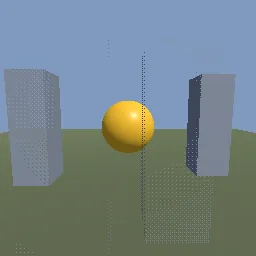
What this component contains
ATTRIBUTION.mdLICENSEREADME.mdcomponent.jsondemo.tscninspect_shader.pymaterial.trespreview.pngscreen_door_fade.gdshadertest_package.pyverification/native.json
How it works
- Shader type
- spatial
- Parameters
- albedo (vec4 = 0.55, 0.6, 0.68, 1), roughness (float = 0.7), fade (float = 1), near_distance (float = 1), far_distance (float = 2.6), dither_scale (float = 1), use_distance (bool = yes)
- Result
- Pillars near the camera break into a regular dot pattern you can see through, solid further away.
- Renderers
- compatibility: compiled and rendered, forward plus: not verified, mobile: not verified
- Placement
- res://baltor/godot_shaders/screen_door_fade/
Recorded checks
godot 4.7.2.stable.official.ed1daf0bf
contract_staticengine_runengine_log_cleanshader_in_scenecapture_writtenrender_not_uniformshader_changes_pixels
Limits to consider
The pattern is visible as a grid at low resolutions and flickers with temporal anti-aliasing off; with TAA or FSR it smooths out. Shadows use the shadow camera's distance, not the main camera's, so a faded object can still cast a full shadow.